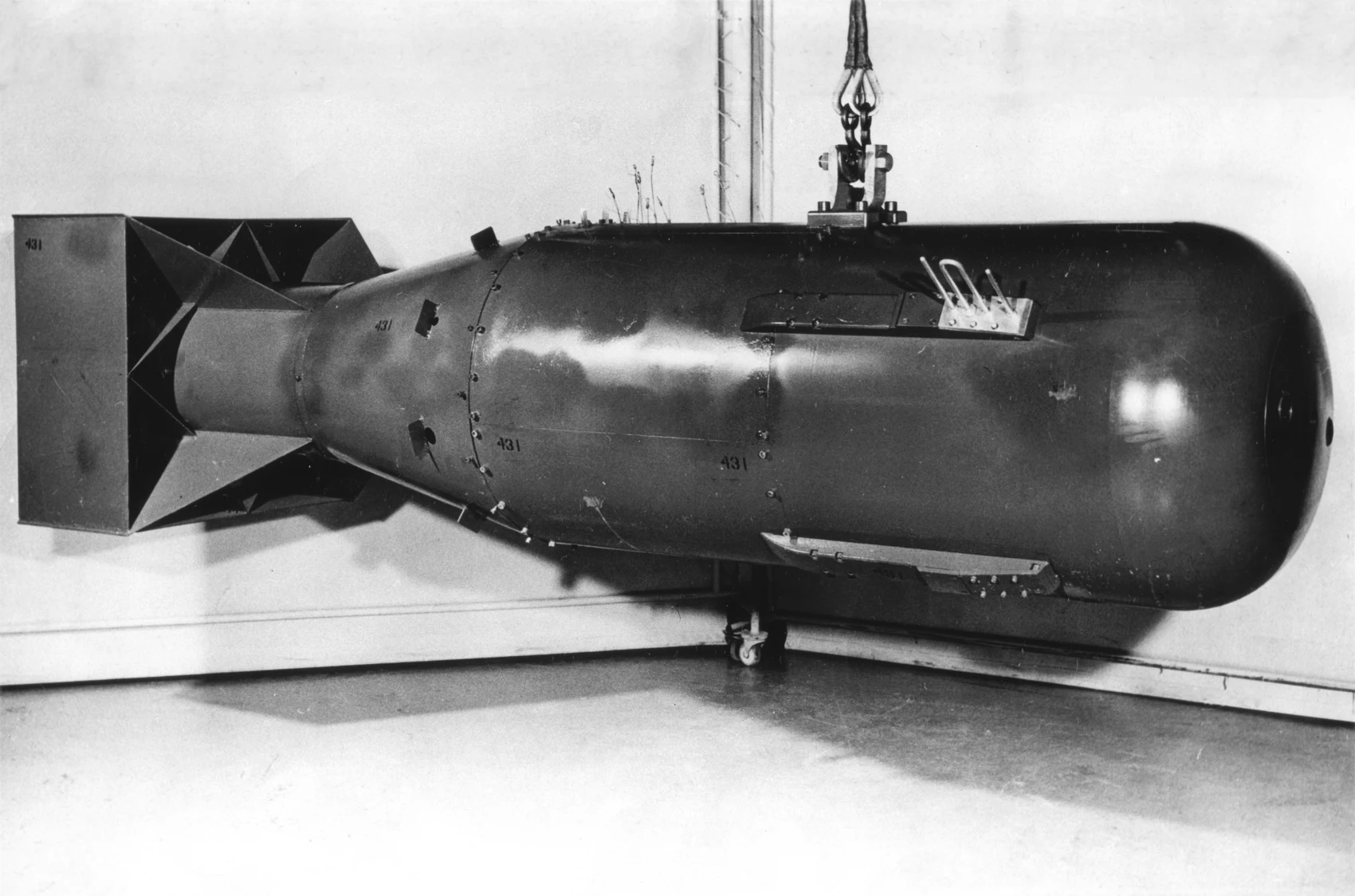

Research and production
The weapon used enriched uranium from Oak Ridge. Los Alamos developed the weapon while the industrial plants were scaling up production. Little Boy used the project’s uranium gun-type design. Trinity tested the separate plutonium implosion approach, so the weapon dropped on Hiroshima had not undergone a full nuclear test.
The Science of Little Boy →Explore quantum states, nuclear materials, and the history of the design step by step.
The science of fission
When a fissile nucleus absorbs a neutron, it can split into smaller nuclei. The fragments carry kinetic energy, and the reaction releases radiation and additional neutrons. If enough neutrons trigger further fissions, the chain reaction grows. The term supercritical describes a system in which the neutron population increases from one generation to the next.
In a power or production reactor, operators regulate a chain reaction over time. In these weapons, a rapidly growing chain reaction released energy before the device disassembled. That energy heated the surrounding material and air, producing the flash and blast. Ionizing radiation reached people near the explosion and contributed to acute illness and later disease.
From natural uranium to Oak Ridge
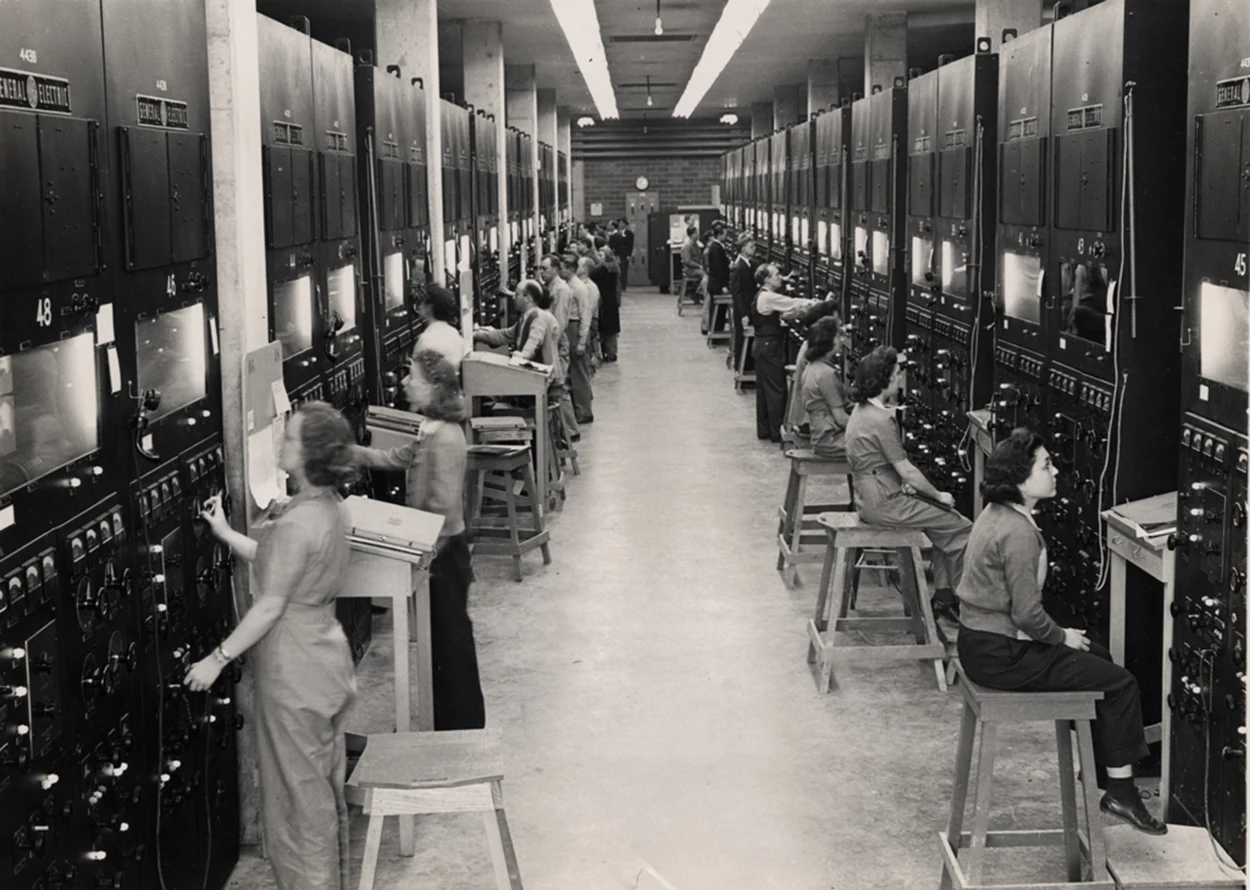
Isotopes of uranium have the same chemical identity and different masses. Natural uranium contains relatively little uranium-235, the isotope the project sought to concentrate. Oak Ridge pursued several industrial methods at once. Y-12 used electromagnetic separation, K-25 used gaseous diffusion, and S-50 used thermal diffusion. The plants complemented one another as the project increased production.
These were large industrial operations. The photograph below shows workers monitoring Y-12 equipment. The project’s uranium supply depended on their operating work as much as on laboratory research.

From laboratory design to the air mission
Los Alamos developed the uranium weapon and the Army Air Forces adapted a B-29 to carry it. Fabrication, aircraft integration, handling, and reliable release were separate engineering jobs. Teams used nonnuclear test articles to study how the weapon would behave in flight. Final preparations took place on Tinian.
Historians call Little Boy a gun-type weapon. At a conceptual level, it brought separate uranium components together, changing the conditions for neutron multiplication. The project conducted no full nuclear test of Little Boy before Hiroshima. Trinity tested a different design, based on plutonium.
The mission
The B-29 Enola Gay departed Tinian on August 6, 1945. Hiroshima’s Aioi Bridge was the aiming point. The bomb detonated above the Shima Hospital area. The city records the time as 8:15 a.m. local time. The U.S. National Park Service mission chronology identifies its time convention, which is important when comparing it with Japanese accounts.
The people below
At 8:15 a.m., students clearing buildings for firebreaks were already out on the streets. Other people were at home, working, or passing through the city. Those exposed included Koreans, Taiwanese, Chinese, and American prisoners of war as well as Japanese residents. Where a person stood, whether a wall shielded them, and who could reach them afterward all mattered.
Setsuko Thurlow was thirteen and had been mobilized for wartime work. She recalled escaping a collapsed building. Sadako Sasaki, who was two at the time, survived the bombing and died of leukemia ten years later. Their experiences span two very different timescales of the disaster.
The devastating impact
In the first minutes, the flash burned exposed skin and the blast brought down buildings. Fires then spread through damaged neighborhoods. People searching for water, relatives, and treatment did so in a city where medical facilities and staff had themselves been hit.
Hiroshima estimates about 140,000 people died by the end of December 1945. This includes people who died in the weeks and months after the attack. Surviving the first day could mean years of treatment, family loss, or the later emergence of radiation-related illness.
- Hiroshima · The day of the bombing
- Hiroshima · Survivor stories
- Hiroshima · Surviving across decades
- National Park Service · Atomic weapons
- National Park Service · Flight chronology