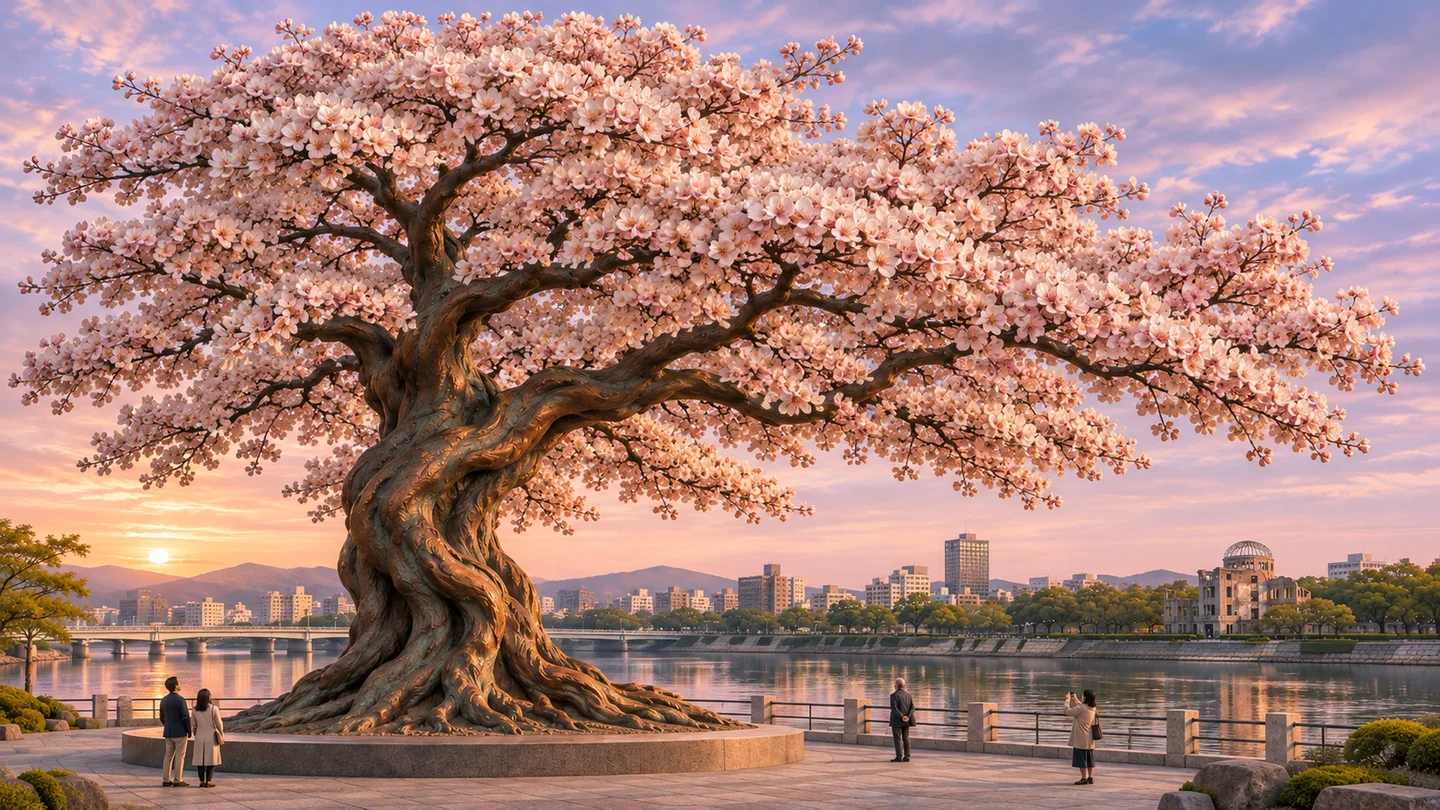
Folded cranes
The cranes at Hiroshima’s Children’s Peace Monument recall Sadako Sasaki and the effort by her classmates to remember children killed by the bombing.
Hiroshima’s cranes →For the people of Hiroshima and Nagasaki, and for the peace that Japan and the United States have the responsibility to protect together.
Explore the memorialIn the capital of the country that dropped the bombs, this memorial would give people a place to learn what happened, remember the people who lived through it, and honor the friendship our countries have built since.
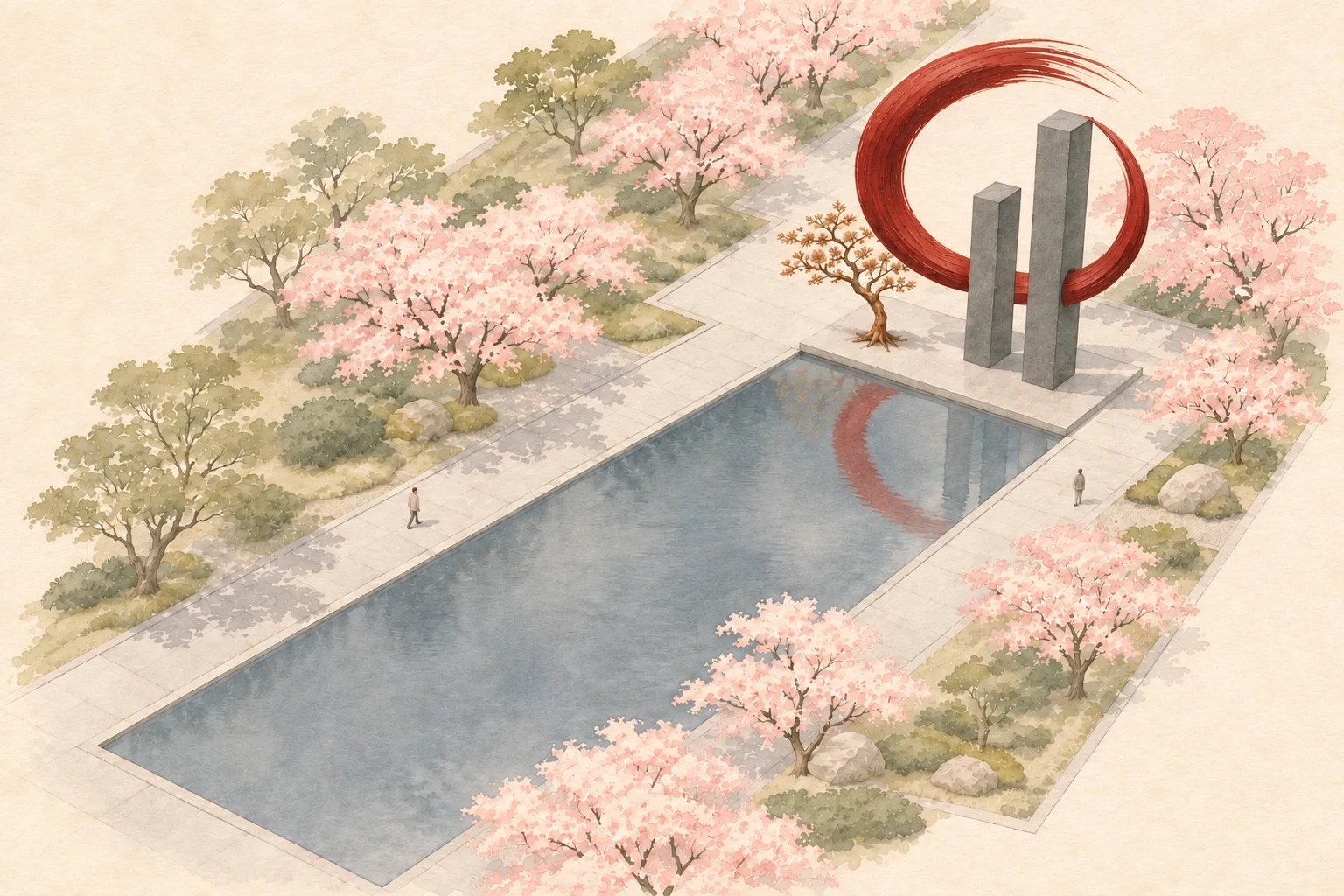
Two upright granite stones would carry the names of Hiroshima and Nagasaki in Japanese and English, along with the local dates and times of the bombings.
A broad metal brushstroke with a matte iron-oxide red finish would trace an open ensō across the upper halves of both stones, with flush lower joints at both pillars. A small bronze mount joins the underside of the broad sweep to the top of the taller pillar. The thinner right arc meets the same pillar at its upper corner. Feathered edges and fine gaps would let light through like dry bristle marks, while the crimson finish would recall Japan’s sun disc. A cast bronze cherry tree would stand to the viewer’s left on the same granite base.
A still reflecting pool would hold both stones in view. A step-free path and places to sit would give visitors room to reflect at their own pace.
Cherry trees would frame the approach, echoing a familiar sign of friendship in Washington. The proposed setting is conceptual.
The cranes at Hiroshima’s Children’s Peace Monument recall Sadako Sasaki and the effort by her classmates to remember children killed by the bombing.
Hiroshima’s cranes →On the evening of August 6, people float paper lanterns carrying peace messages on Hiroshima’s Motoyasu River.
The lantern ceremony →At Nagasaki’s National Peace Memorial Hall, the water basin recalls the thirst of those who died. That documented practice gives the proposed Washington reflecting pool another association.
Nagasaki’s remembrance sites →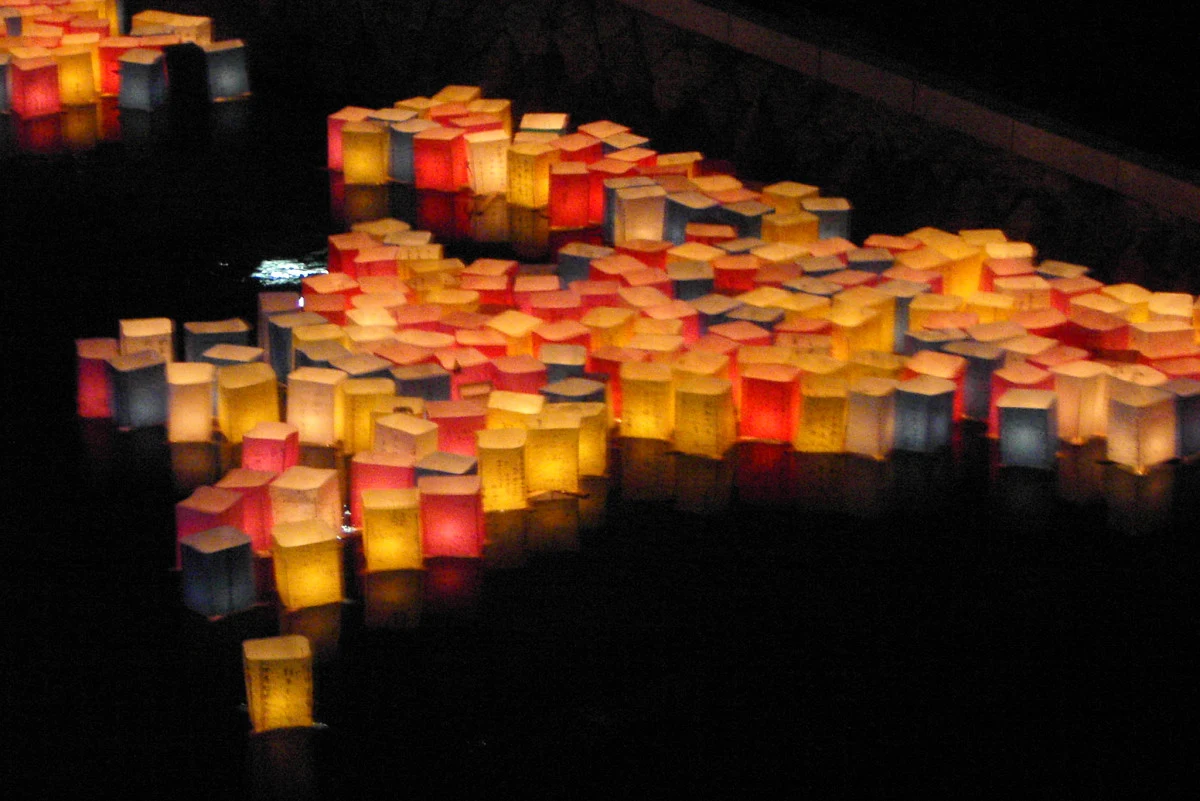
At dusk on August 6, messages of peace travel down Hiroshima’s river in paper lanterns.
See how Japan remembers →In 1912, Tokyo gave Washington cherry trees as a gesture of friendship. First Lady Helen Taft and Viscountess Chinda planted the first two along the Tidal Basin. The proposed grove would draw on that shared history while giving visitors a place to remember the people of Hiroshima and Nagasaki.
National Park Service · The story of the cherry trees →Friendship asks us to hear what survivors carried, welcome each other in places of mourning, and take responsibility for the peace we share.
Read about reconciliation →